Best Practice Guide on Participatory Processes
Effective participation acts as a bridge that can bring all stakeholders together and build relationships of trust within a community. The development of participatory processes and structured consultation on critical collective issues facing a community can serve as a useful tool for decision-makers seeking to minimise conflict and promote effective, sustainable policies.
The development and implementation of a comprehensive participatory process for the planning and management of a Marine Protected Area (MPA) requires a multi-level and structured framework for action. Based on WWF Greece’s experience from the operation of the Co-management Committee and the various participatory processes used in the case of Gyaros, the following Best Practice Guide has been formulated, with the aim of contributing to the creation of a coherent network of effectively managed MPAs in Greece and beyond.
The Best Practice Guide is structured around three key phases:

Each phase has its own significance and contributes to the programme’s effectiveness.
Introduction
General Information on Participatory Processes
Public Participation & Participatory Decision-Making Processes
At a time of intense social, economic and political conflict, the importance of engaging citizens and stakeholders who are well-informed and actively participate in public affairs is recognised – at international, European and national levels – as a particularly crucial factor in promoting sustainability, effective planning and the achievement of meaningful solutions to challenges of all kinds.
Terms and Concepts of Participation
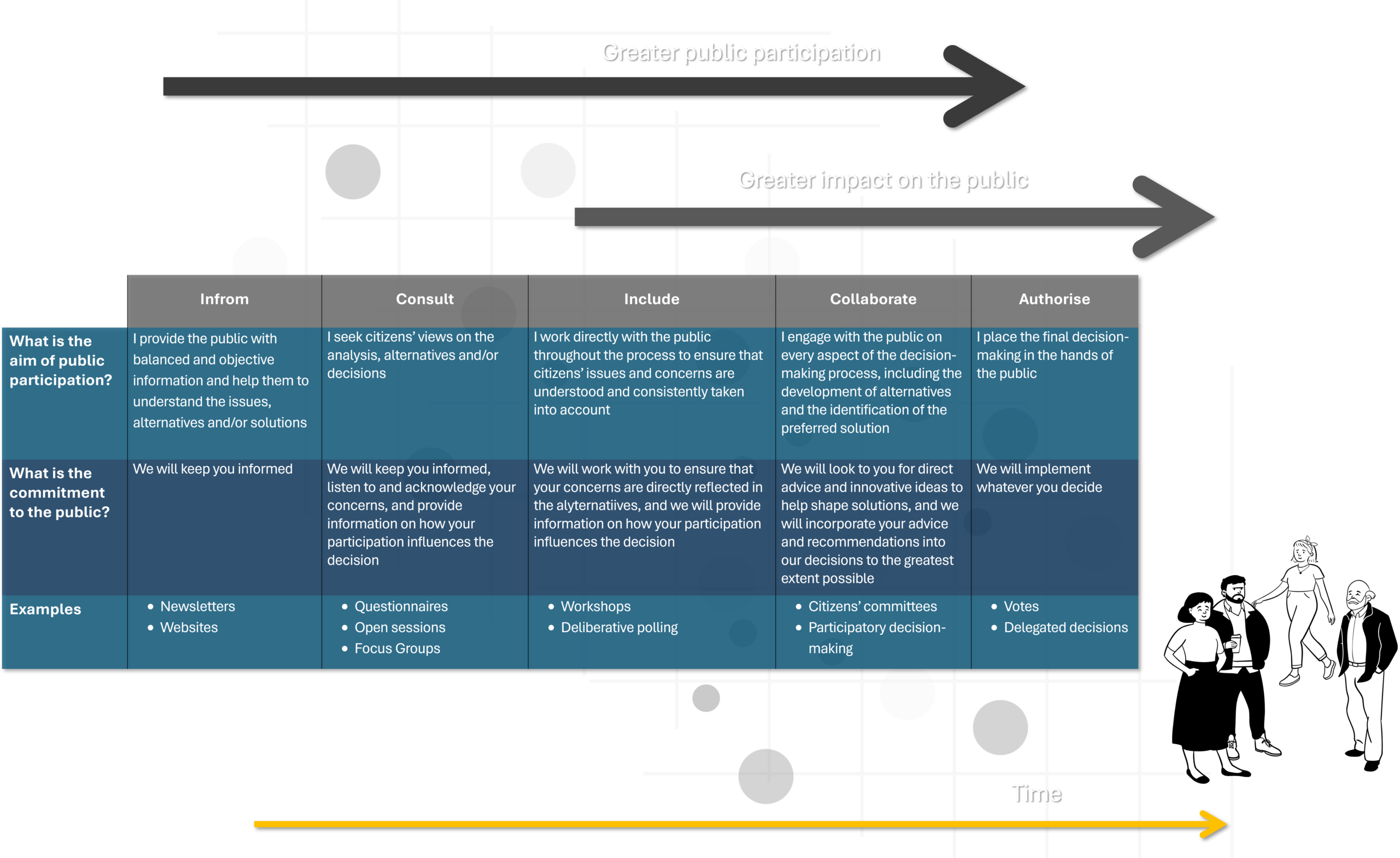
Depending on the circumstances, public participation can encompass a wide range of interactions between stakeholders, utilising a variety of approaches, ranging from one-way communication or the simple provision of information, through consultation, participation and collaboration in decision-making, to authorised action within informal groups or formal partnerships. The very broad term ‘public’ is used to refer to stakeholder groups, groups with shared interests, groups of citizens (e.g. geographically defined communities), or identity-based groups (such as professional or sporting communities). Public participation is therefore a structured process, with the specific aim of working with the identified stakeholder groups to address the issues that affect them.
The Benefits of Structured Participation
Participation makes it possible to mobilise and fully utilise the knowledge, skills and resources of the stakeholders and the community in question. Essentially, the main benefit of involving all stakeholders is that it enhances the effectiveness of the initiative undertaken on each occasion.
Another significant benefit is the more efficient use of resources. The knowledge and skills of the stakeholders help to minimise the waste of resources and achieve significant results. What is of great importance, however, is the fact that broad participation is the only guarantee of the sustainability of any initiative. When citizens take the initiative or help shape initiatives, when they invest their hopes and resources in them, they are more likely to take an interest in their long-term sustainability.
Consequently, stakeholder participation creates and reinforces a sense of ownership in proposed solutions or future plans, making them partners in decision-making with a greater sense of responsibility for shaping their own future, whilst at the same time, at an individual level, they are empowered and develop a proactive relationship with the issues that concern them.
Furthermore, with regard to the organisations implementing a project, the participation of all stakeholders improves the quality of the projects and policies developed by these organisations, making them more practical, realistic and relevant to local conditions. Furthermore, two-way communication helps to highlight pressing issues, enabling organisations to address them immediately, thereby reducing the likelihood of conflicts and enhancing their image as open, responsible and willing to listen.
Participatory Processes in the case of Gyaros
In the case of Gyaros, WWF Greece, as coordinator of the CYCLADES LIFE, in collaboration with the other project partners (the Ministry of Environment, Energy and Climate Change, the Decentralised Administration Authority of the Aegean, the Cyclades Development Agency, Harokopio University, the Italian research institute Tethys, and MOm (Society for the Study and Protection of the Mediterranean Monk Seal), decided to proceed with the planning of a new marine protected area (MPA), with the aim to be legally established, through participatory processes involving the key directly involved stakeholders and the users of the area.
The decision to incorporate participatory processes into the planning of the Gyaros Marine Protected Area emerged as an innovative yet necessary alternative, which needed to be tested as a solution to the problem that, in Greece, efforts to establish protected areas over the last 20 years have failed. This was mainly due to local opposition and conflicts that when the Special Environmental Studies – which the legislation foresees as the prerequisite for proposing protection measures for an area – were posted by the State for public consultation for only a short period of time.
The procedure laid down by law, which is based on a ‘top-down’ approach, clearly did not work in practice, as it did not provide for meaningful and structured dialogue with the stakeholders and users of an area; as a result, conflicts and opposition arose at the end of the process, which the political leadership of the relevant ministries were often unable to resolve; consequently, many conservation proposals did not proceed to the final designation of an area as protected and remained pending for decades.
To address this problem, the project partners chose to utilize and test a ‘bottom-up’ approach, with the aim of bringing any disagreements and/or conflicts to light and to the forefront immediately and ensuring there was sufficient time and an appropriate process to manage and resolve them.
For this purpose, an informal consultation body was established – the Gyaros Co-management Commitee – in which representatives from 15 different bodies participated on a voluntary basis, giving this body a pivotal role in the planning of the MPA.
Contents
Planning
The planning phase is crucial for the development of a credible and effective participatory process, regardless of its nature, subject matter or objective. The same was true of the participatory process that WWF Greece decided to implement for the design of conservation measures for the Gyaros area.
In our case, the planning phase was particularly demanding and involved:
- a detailed analysis of the stakeholders and interested parties associated with the area,
- an assessment of the required resources,
- identifying suitable external partners,
- the selection of the best practices and tools for the specific case, and
- planning the stages and individual actions of the participatory process.
Within this framework, critical constraints were identified and realistic timetables were drawn up.
It was the Planning phase that laid the foundations for the substantive and practical implementation of the entire participatory process, with a view to jointly formulate appropriate and mutually acceptable protection measures for the area.
Objectives – Scope
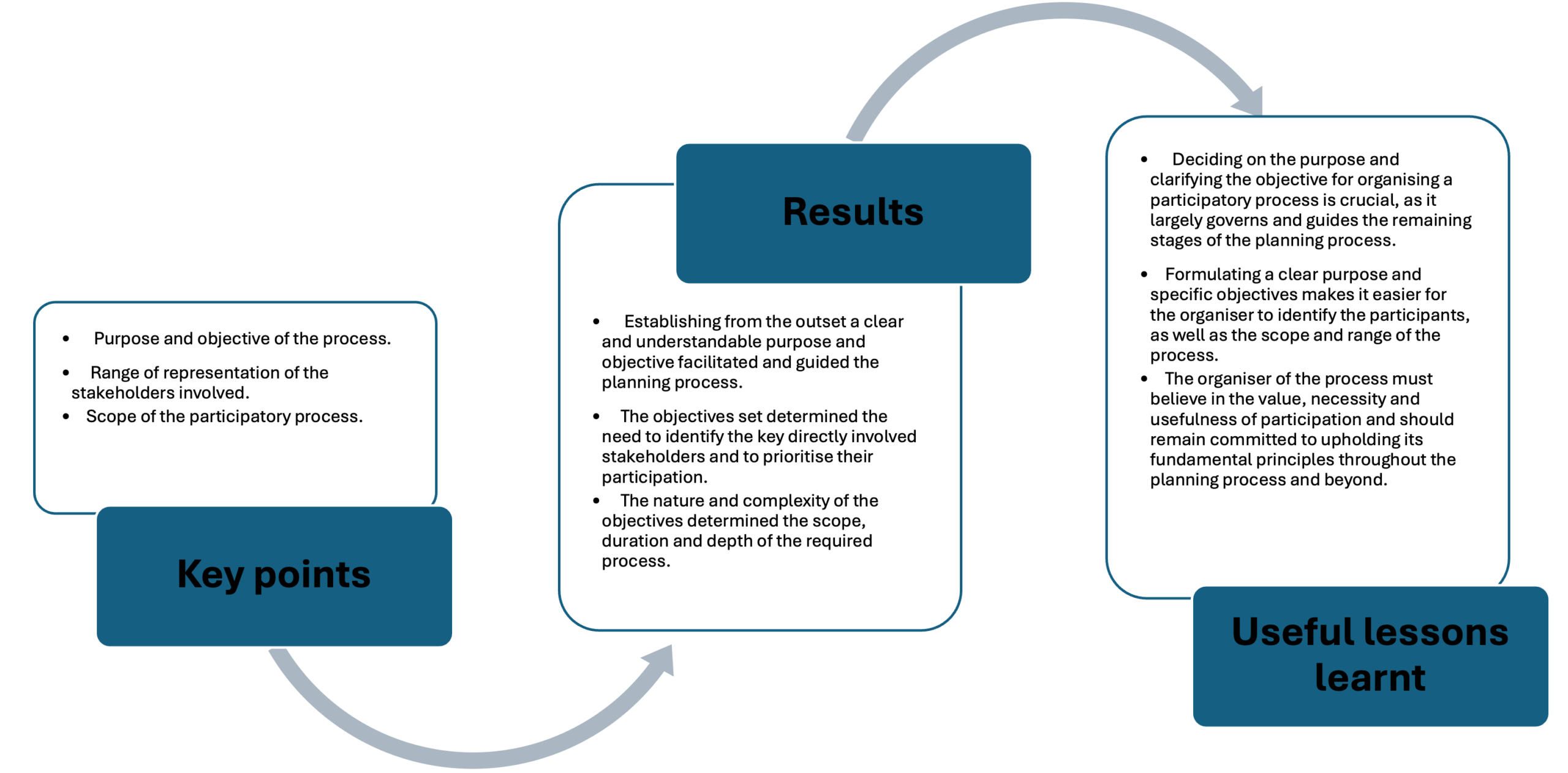
The objectives, scope and range of a participatory process vary and can differ significantly, depending on what the organiser of the participatory process wishes to achieve and on how they choose to structure the process. It is important, however, for the organising body to be clear and to make it clear to those taking part in the process what the purpose and objective of their participation are, what its scope is – that is, who is taking part and why – and how far the process will go.
In our case, WWF Greece set out two objectives from the outset:
- to formulate a comprehensive and mutually acceptable proposal for the establishment of protection zones and specific conservation measures for each zone on the island of Gyaros and the marine area within 3 nautical miles of it, and
- to formulate a mutually acceptable proposal for the governance, administration and management structure of the new Marine Protected Area.
Given the complex nature of the subject matter in our case and the complexity of the specific objectives, it was decided to involve, either directly or indirectly, the greatest possible number of stakeholders – relevant to Gyaros – and that the process should be extensive in terms of both time and depth, so that it would be possible to formulate appropriately substantiated proposals for discussion, deliberation and joint decision-making.
Stakeholder Analysis
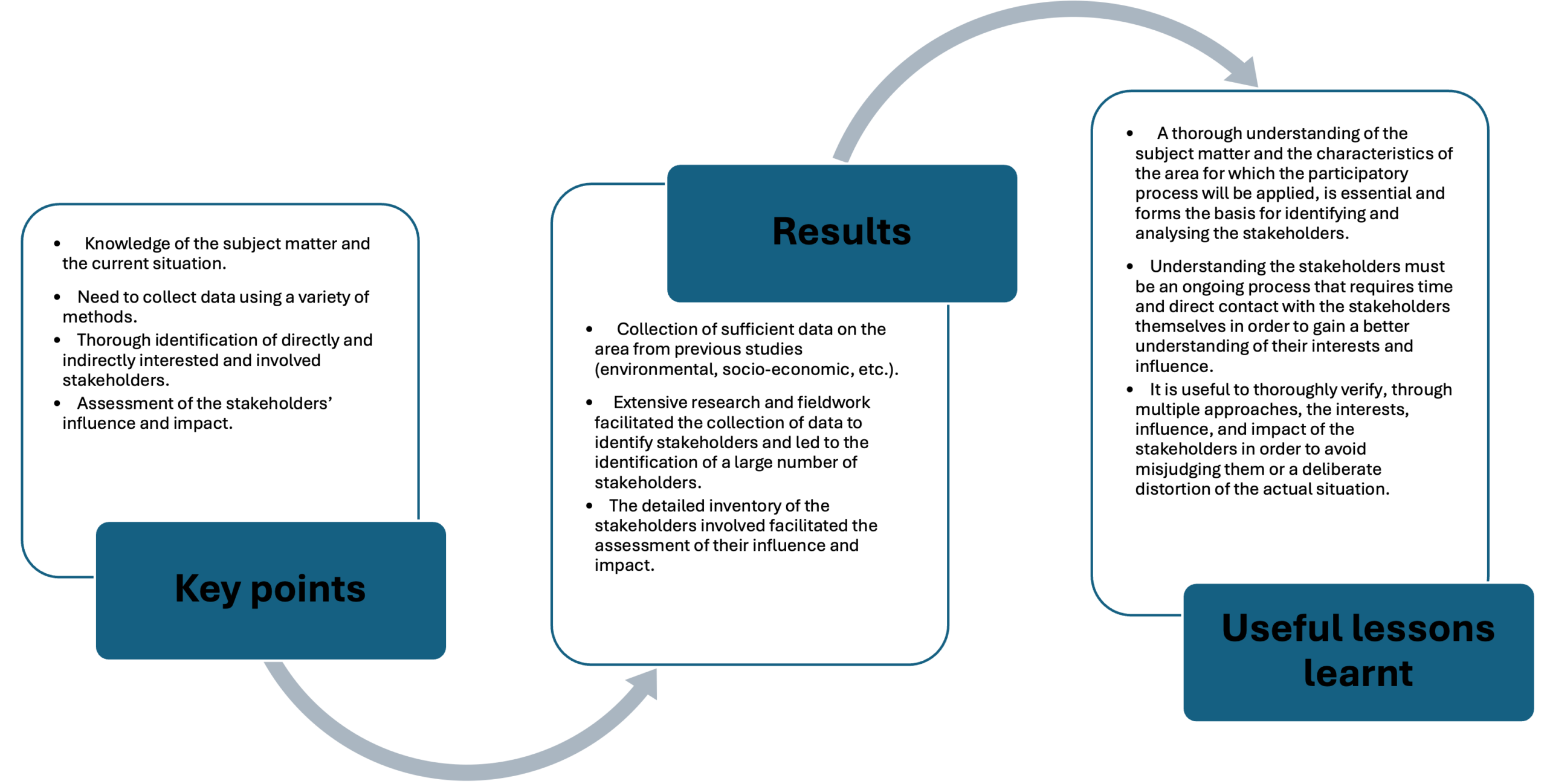
The stakeholder analysis must be tailored to the objectives of the specific project, as well as to the context and specific circumstances relating to a given area. Once the objectives of the project and of the participatory process have been defined, it is essential to research and document the main characteristics of the area in question, such as:
- ecological characteristics, ecosystem services, features to be protected, conservation objectives, key ecological elements, potential threats, existing land uses,
- socio-economic characteristics of the area, employment, as well as administrative boundaries (regions, regional units, municipalities),
- existing horizontal regulations and any specific institutional framework for the area in question.
Next, potential ways in which the project will bring about changes to the characteristics of the area of interest should be identified, so that all groups that influence or are influenced by such changes can then be recorded.
The stakeholder analysis involves: (a) identifying the stakeholders and (b) mapping their interests and level of involvement. This step is particularly important, as it shapes and forms the basis for the subsequent steps in the analysis and planning process. The more comprehensive and thorough the identification of stakeholders, and the more detailed and accurate the mapping of their interests, the more accurate the stakeholder analysis will be and, ultimately, the more useful it will be for the appropriate selection of those who will take part in the participatory process.
In our case, the analysis began several months before the planning of the participatory processes was initiated and, in total, lasted for more than nine months.
The Project Team, having at its disposal data on ecological characteristics, potential threats, existing land uses, socio-economic characteristics, horizontal regulations and the specific institutional framework of the area – all of which had been collected over the previous two years as part of the CYCLADES LIFE project – proceeded to compile a list of all stakeholders and interested parties relating to the wider Gyaros area. The mapping process took several months and was based on a literature review and interviews with a variety of organisations at national, regional (South Aegean) and local levels (neighbouring to Gyaros islands).
The detailed mapping of all directly and indirectly involved stakeholders resulted in a particularly extensive list of more than 100 organisations of international, national, regional and local organisations, which were evaluated to have an interest in the Gyaros area in terms of its natural environment, historical heritage – given the Gyaros Historical Site – and cultural elements, and which would influence or be influenced by the designation of the area as an MPA, in accordance with national environmental legislation.
Subsequently, the characteristics, nature and type of interest, as well as their relationship with the area, were recorded in greater detail, and the degree of influence of each stakeholder was assessed, along with the potential impact of the creation of the Gyaros MPA on each stakeholder, and were categorised into direct and indirect stakeholders.
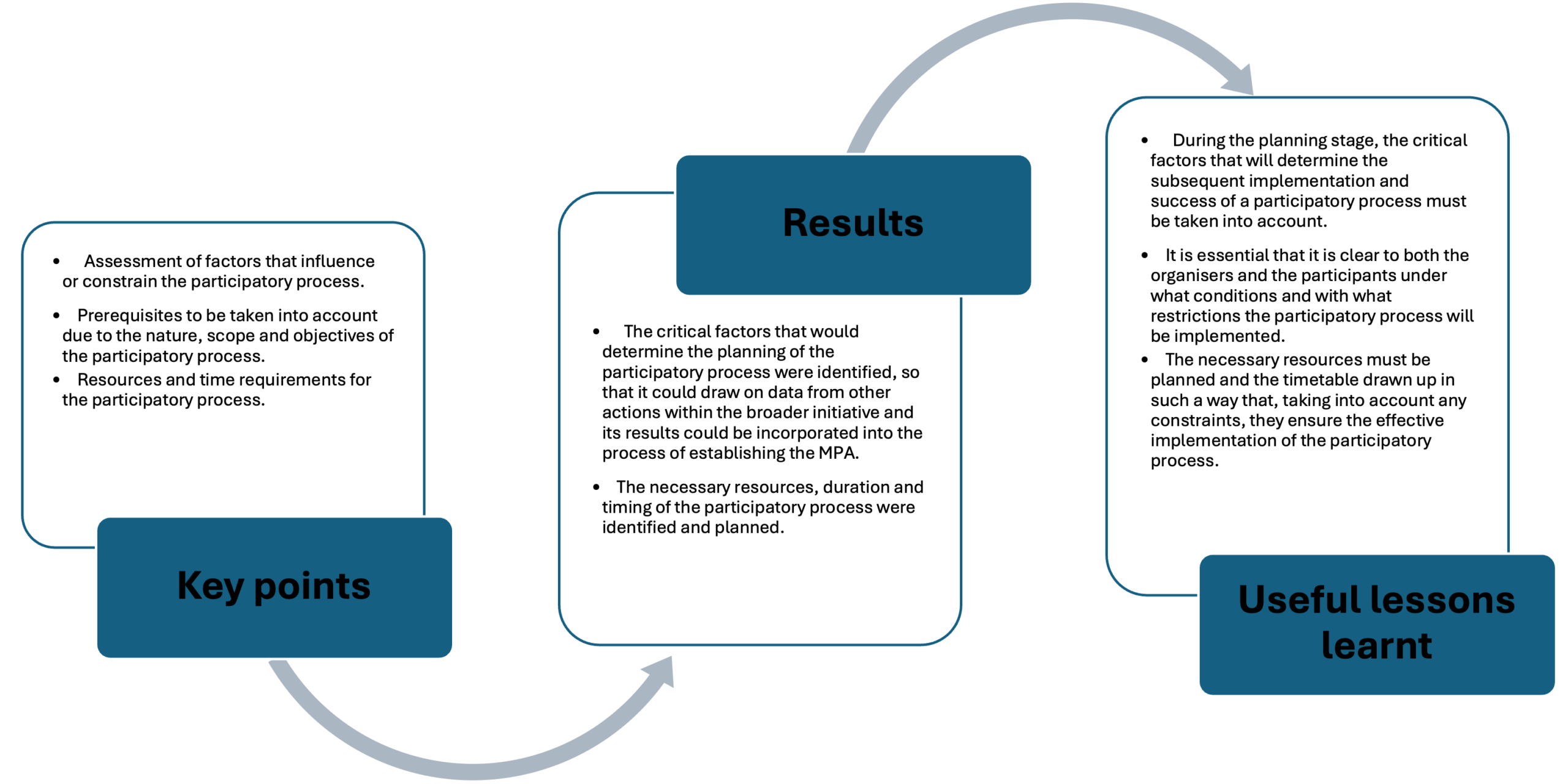
Prerequisites/Limitations
A clear definition of the conditions arising from the scope and objectives of the participatory process, and an assessment of the constraints arising from the nature of the organisation undertaking such an initiative and the programme framework, through which the participatory process is implemented, are essential for its successful implementation. During the planning phase, a lack of clear definition of critical parameters, such as time and available resources, can create obstacles, such as insufficient funding, inadequate staffing and difficulties in implementation. Equally important is developing of a realistic timetable, which must take into account any constraints and conditions, so as to ensure the smooth implementation of the participatory process and to allow sufficient time to address potential difficulties (e.g. conflict management, unforeseen developments affecting the relationships between those involved, etc.).
In our case, the key factors and conditions that had to be taken into account stemmed from the complex nature and objectives of the participatory process, as well as from the timetable and sequence of other actions within the wider project. Consequently, during the planning stage, the Project Team had to plan in appropriate detail the preparation of the participatory process, the establishment and operation of the Co-management Committee, so that environmental and socio-economic studies and the collection of data on the area—which would form the scientific basis for the Committee’s discussions—could be carried out beforehand. At the same time, the Committee should have sufficient time to operate and achieve its objectives, whilst also completing its work in time, so that its proposals could be incorporated into the Special Environmental Study being drawn up in parallel, to be submitted to the Ministry of the Environment for approval and subsequently to set in motion the formal establishment of the MPA, as provided for by national legislation.
Furthermore, taking the above into account, the necessary resources (staff, external consultants, financial budget, etc.) were assessed and planned, which would need to be invested to ensure the smooth and effective implementation of the participatory process, given the need for an expanded consultation framework such as the Co-Management Committee, which would need to operate for a period of approximately two years, with regular, face-to-face meetings on Syros.
Identifying & Recruiting Staff & Partners
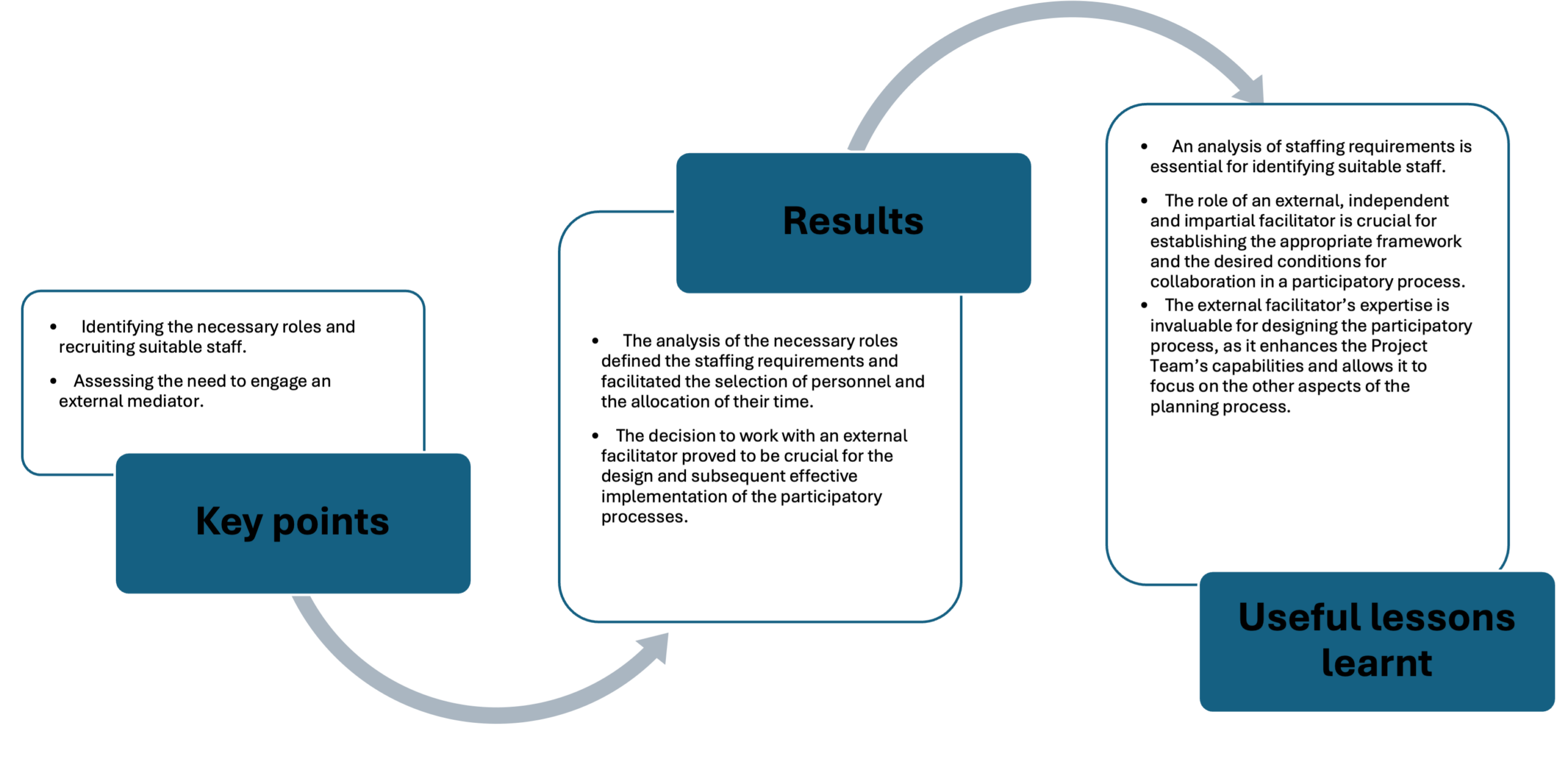
When planning a complex and demanding participatory process, the organisation undertaking such a project should analyse, define and select the staff who will be responsible for its implementation. At the same time, it must decide whether to involve specialist external partners, such as an external facilitator. An external facilitator, in collaboration with the implementing body, can contribute to the planning and facilitate the implementation and monitoring of the participatory processes. Their contribution begins with defining the objectives of the process and analysing the stakeholders, and continues through to the selection and application of appropriate tools and techniques, right through to the monitoring and evaluation of the process. They create the appropriate conditions and framework for effective and meaningful participation and consultation amongst stakeholders, whilst acting as a neutral intermediary, between the organisation and those involved, regarding information needs and other requirements for the smooth operation and evaluation of the process’s progress and effectiveness.
In our case, the first step was to assess and identify the human resources that would be involved in the planning, implementation and management of every aspect of the participatory process, including establishing and maintaining a collaborative and participatory relationship with the stakeholders, the practical organisation (logistics) of the participatory process and the meetings; the running and management of meetings (secretarial duties, meeting minutes, etc.); the communication and dissemination of results; and the evaluation of the entire process.
Overall, it was estimated that, for the three years that the entire participatory process would last, four different staff members with distinct roles would be required, corresponding to approximately 0.8 full-time equivalents (FTEs).
The second and most important step was the decision to recruit an external specialist in the field of participatory process management to act as an independent facilitator with the aim of contributing to this specific project in a variety of ways.
Planning & Drafting a Detailed Timetable
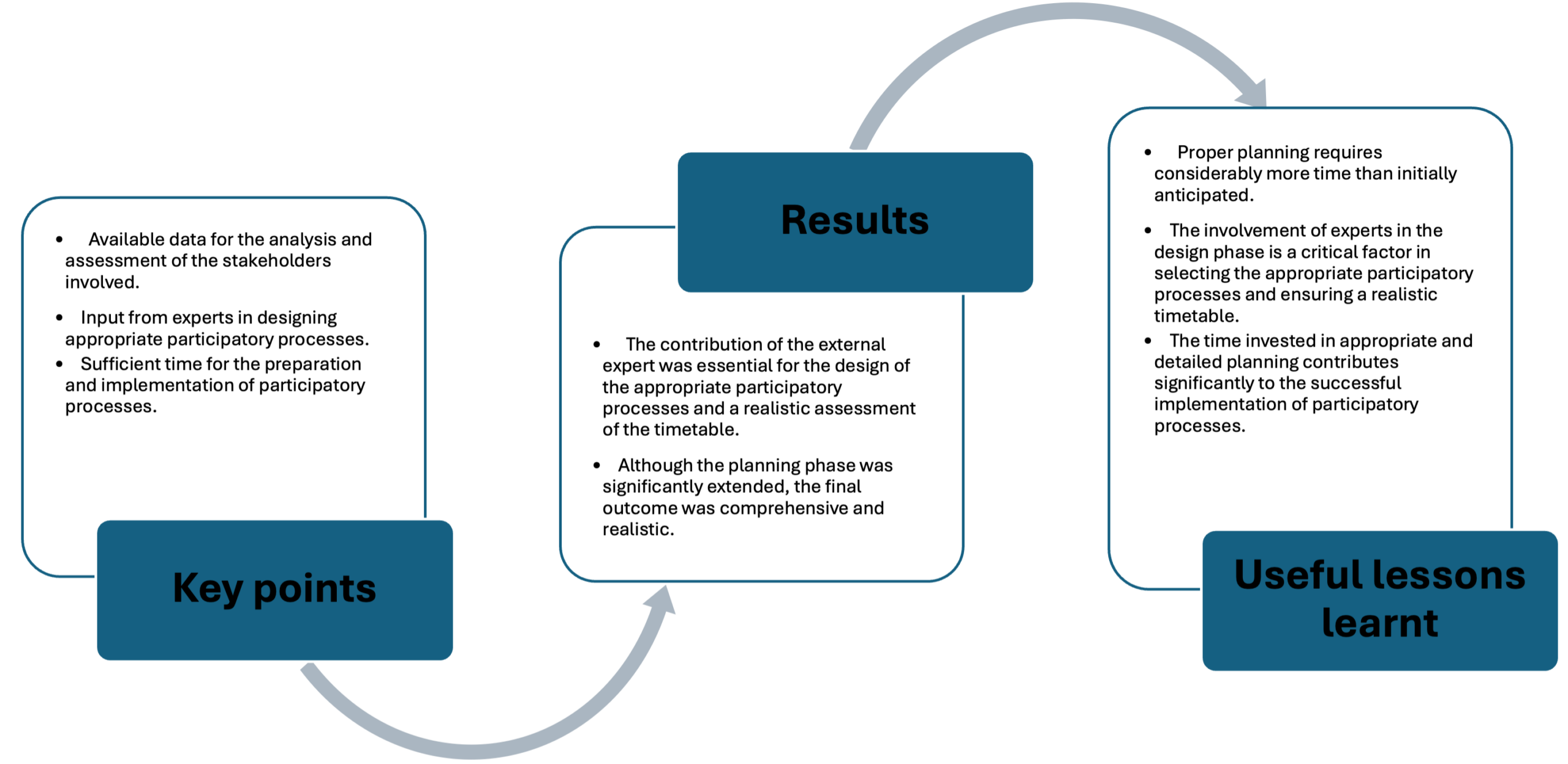
The timetable and the appropriate, detailed planning of the participatory process are crucial tools for ensuring the smooth and effective implementation of all subsequent stages. The timetable must be drawn up on the basis of realistic data, bearing in mind that the participating bodies have their own schedules and commitments and are not always readily available. At the same time, sufficient time must be allowed for the selection and detailed planning of the individual elements of the participatory process.
Detailed planning and thorough preparation of a participatory process go a long way towards ensuring their success, and this requires the organisers to invest sufficient time.
In our case, the initial planning for the implementation of the participatory process began later than anticipated and lasted approximately 6 months. This time was needed to ensure that the Project Team had access to all the necessary socio-economic data for the wider region. Once this data had been analysed, the Project Team was able to identify the stakeholders, make initial contact with them and plan the specific steps for preparing and implementing the participatory process (part of which were designed to take place online), as well as to estimate the timeframe and resources that would be required.
Resources and Budget
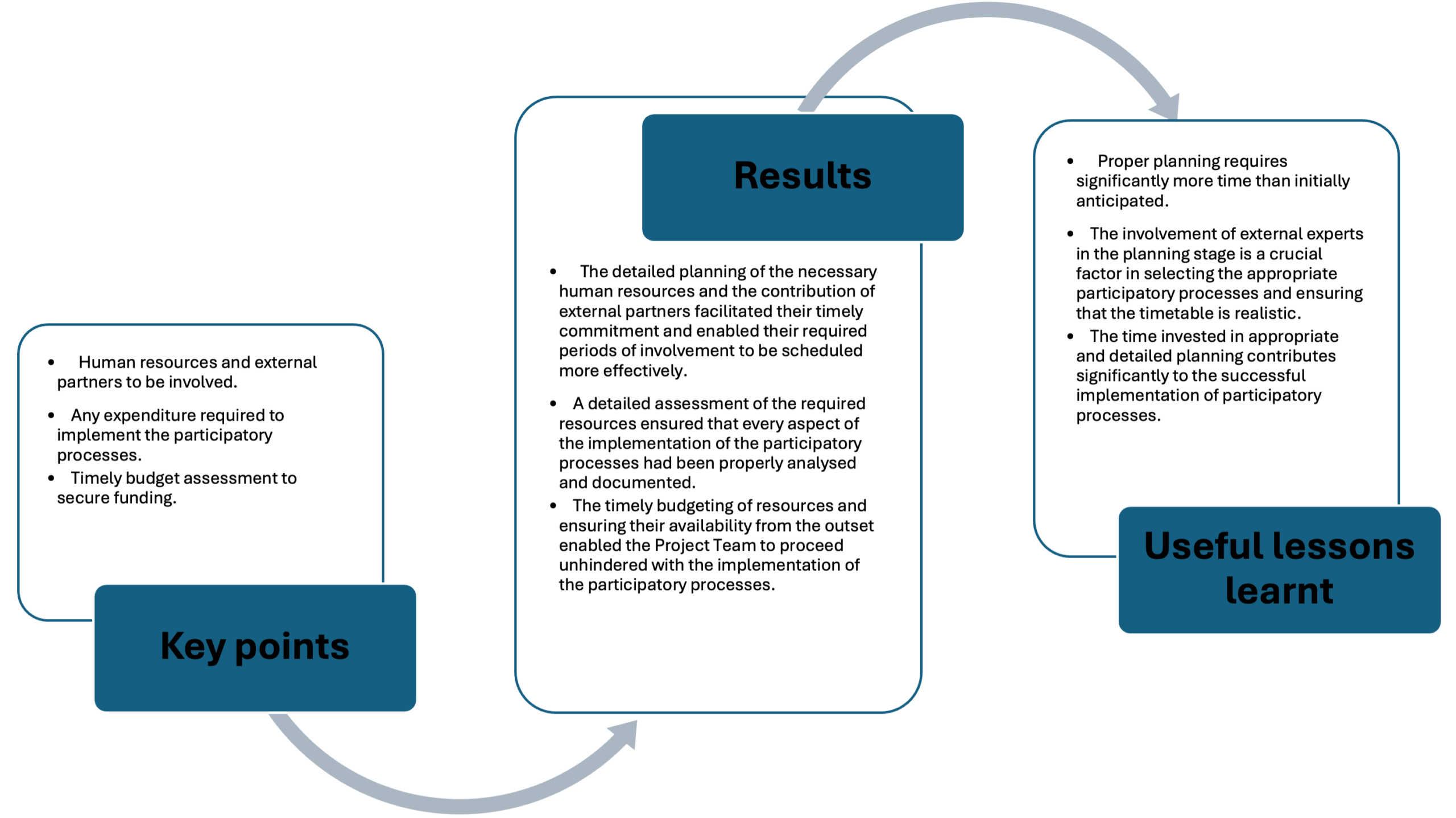
A detailed record of the necessary resources during the planning phase of a participatory process must include, at a minimum, the staff who will organise and implement the participatory activities, the specialist external partners who will be involved, the materials and tools to be used, as well as any other expenditure required during the implementation of the participatory activities.
In our case, analysing and recording the necessary resources and drawing up the detailed budget constituted the final stage of the planning process, with the aim of gaining a complete picture of the requirements and ensuring that these would be available before the participatory processes began. More specifically, the budget included:
- the human resources required to organise and implement the participatory processes (contacts with stakeholders, organising and running meetings, communication and dissemination of results, financial management, etc.),
- the participation and contribution of the external specialist facilitator,
- the travel costs of the representatives of the participating stakeholders for the meetings,
- the rental of meeting venues,
- various materials and consumables, as well as
- any other costs that could be expected to arise during the participatory processes.
To these an amount of around 7% was added to cover extraordinary/unforeseen expenses, as the planned participatory processes were of considerable duration and the likelihood of unexpected needs arising was significant.
The total initial budget for the three-year period during which the participatory processes for the co-design of the Gyaros MPA would run, was estimated at €220,000.
Having now fully assessed the necessary resources, the decision was taken to proceed immediately with implementation, as the funds were available from the budget of the broader CYCLADES LIFE project.
In other cases, where funds are not immediately available prior to the start of an extensive participatory process, organisers should consider more cost-effective alternatives and/or explore the availability of resources from the participants’ side (e.g. availability of free venue space, secretarial support, volunteers, etc.).
Implementation
In our case, the implementation and execution of the participatory processes lasted approximately 2.5 years (October 2015 – April 2018) and included:
- the final selection of direct participants and communication with them,
- the selection of specific participatory processes and tools,
- preparing for the establishment and operation of the Gyaros Co-management Committee,
- the preparation of the Committee’s meetings; and finally
- their implementation.
Key aspects during the implementation of the entire participatory process were also the fostering of a climate of trust amongst the participants and in the process itself, managing expectations and ensuring transparency, through consistent and regular communication with the participating bodies, as well as with other stakeholders and local communities.
Final Selection of Participating Bodies
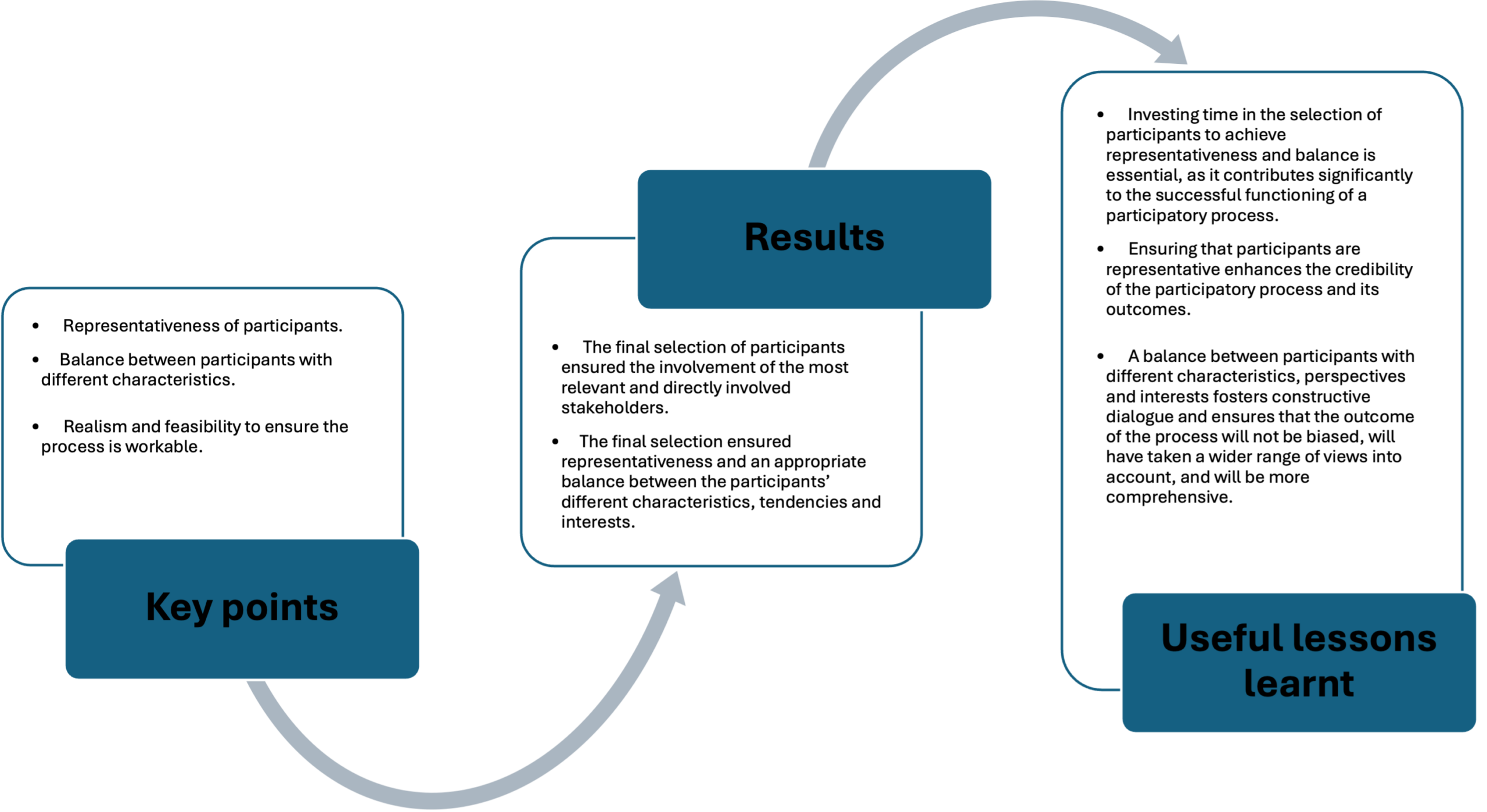
The final selection of participating stakeholders in a participatory process is particularly crucial, as it has a decisive impact on its success in terms of its outcome and the achievement of the set objective. Key criteria for the Project Team’s final selection of participants should include the involvement of stakeholders directly affected, and in particular those with the greatest influence, in conjunction with the greatest potential impact (impact) they can have on the issue under consideration. Additional desirable factors in the final selection of participants should include achieving a certain balance among participants with different characteristics, as well as selecting an appropriate number of participants, so that, based on the available resources, the participatory process that has been decided upon can be feasible and workable.
In our case, the project team’s final selection of the 15 bodies to participate directly in the participatory process – specifically in the Gyaros Co-management Committee – was as follows:
- Ministry of the Environment, Energy and Climate Change
- Ministry of Culture and Sport
- Ministry of Maritime and Island Policy/Coastguard
- Decentralised Administration Authority of the Aegean
- South Aegean Region
- Municipality of Syros-Ermoupolis
- Municipality of Andros
- Cyclades Development Agency
- Syros Professional Fishermen’s Association
- Andros Association of Professional Fishermen
- Cyclades Chamber of Commerce
- Hellenic Centre for Marine Research
- Natural History Museum of Crete
- MOm/Society for the Study and Protection of the Mediterranean Monk Seal
- WWF Greece
Communication with Stakeholders
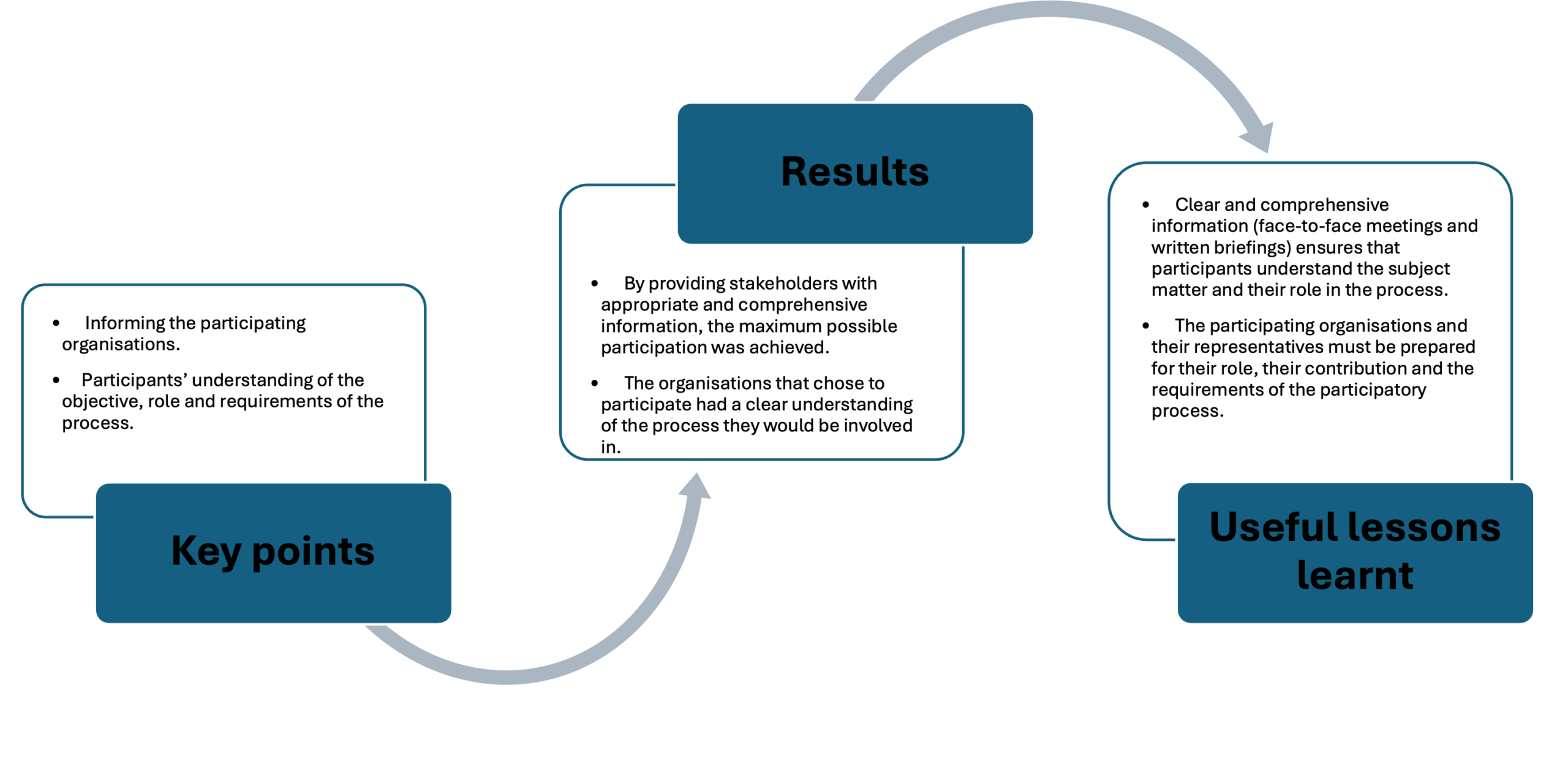
During the preparation phase and prior to the start of a participatory process, direct communication with the stakeholders who will be taking part is required, so that the scope and objective of the process, the role of each participating stakeholder, the procedures to be followed and the expected outcome are clear.
In our case, following the final selection of participants, the Project Team initiated a series of face-to-face contacts and meetings with the stakeholders, explaining the objective of the wider project for the creation of the Gyaros MPA, the rationale behind the participatory planning of the Gyaros MPA, the role of the Gyaros Co-management Committee in formulating a comprehensive and jointly agreed proposal for protection zones and conservation measures, and the role and requirements for each stakeholder’s participation in the Committee. Once the initial round of consultations had been completed, an invitation was sent to each body, requesting their formal acceptance and commitment to participate in the scheme and to appoint their main and alternate representatives. It was also made clear that the Project Team’s intention was for both the main representative and the alternate of each body to participate actively in the Committee’s meetings and consultation processes, so as to ensure continuity and consistency in representation. It is important to note that the Project Team was not involved in the selection of representatives from each organisation; this was entirely at the organisation’s own discretion.
Fifteen of the sixteen selected bodies accepted the invitation and appointed representatives, whilst only the Ministry of Rural Development and Food decided not to participate, due to a lack of available staff.
The entire process of providing information, issuing invitations and receiving confirmations from the participating organisations took five months.
Selection of Process & Tools
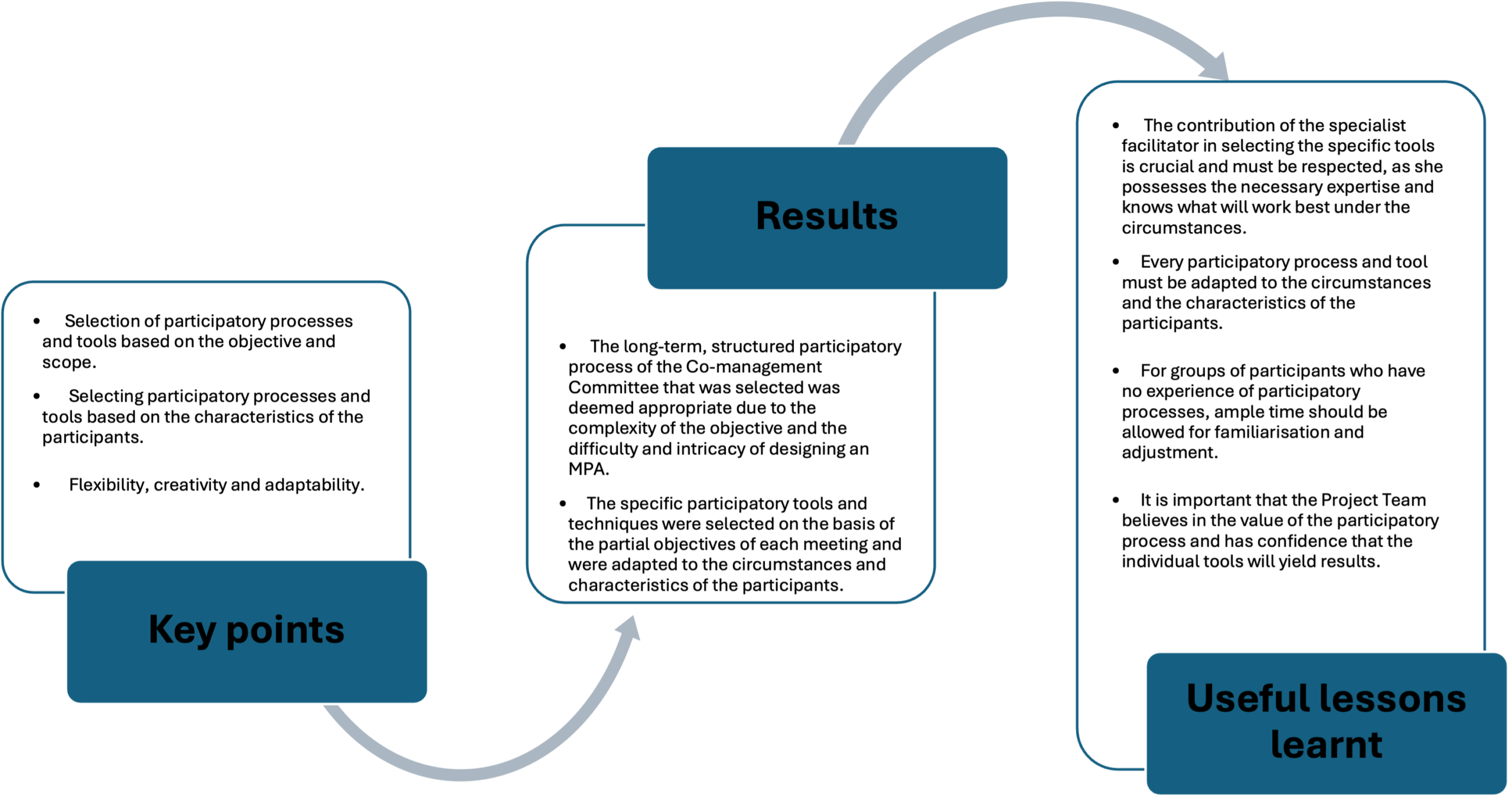
In any participatory process, the specific tools and techniques to be used must be selected with particular care so that they meet the needs and requirements of the specific subject matter, as well as the objectives of the process in question, and are appropriate of delivering results, whilst, at the same time, being suitably adapted to the characteristics and culture of the participating bodies.
In our case, the Project Team chose a long-term, structured participatory process involving multiple meetings of the Co-Management Committee, as this was deemed the most appropriate given the complexity of the objective and the difficulty and intricacy of planning the Gyaros MPA, by a fairly large group of stakeholders.
The specific tools and techniques for the Committee’s meetings were selected in close collaboration with and under the guidance of the external specialist facilitator, based on the particular objectives of each meeting, and were adapted to the circumstances and characteristics of the participants. It is important to note that, given the considerable diversity of the participating bodies and their representatives, particular care was taken to ensure that every tool or technique was appropriately adapted so that no one was excluded and everyone could participate on an equal footing. For this reason, sufficient time was allocated at each meeting to allow all members of the Committee to familiarise themselves with and adapt to the use of the various tools, selected on a case-by-case basis, to support and facilitate the participatory discussion of the individual topics.
Preparing for the functioning of the Co-management Committee
In any initiative or project that involves or is based on participatory processes, appropriate and detailed preparation is the fundamental and decisive prerequisite that will lay the foundations for successful implementation.
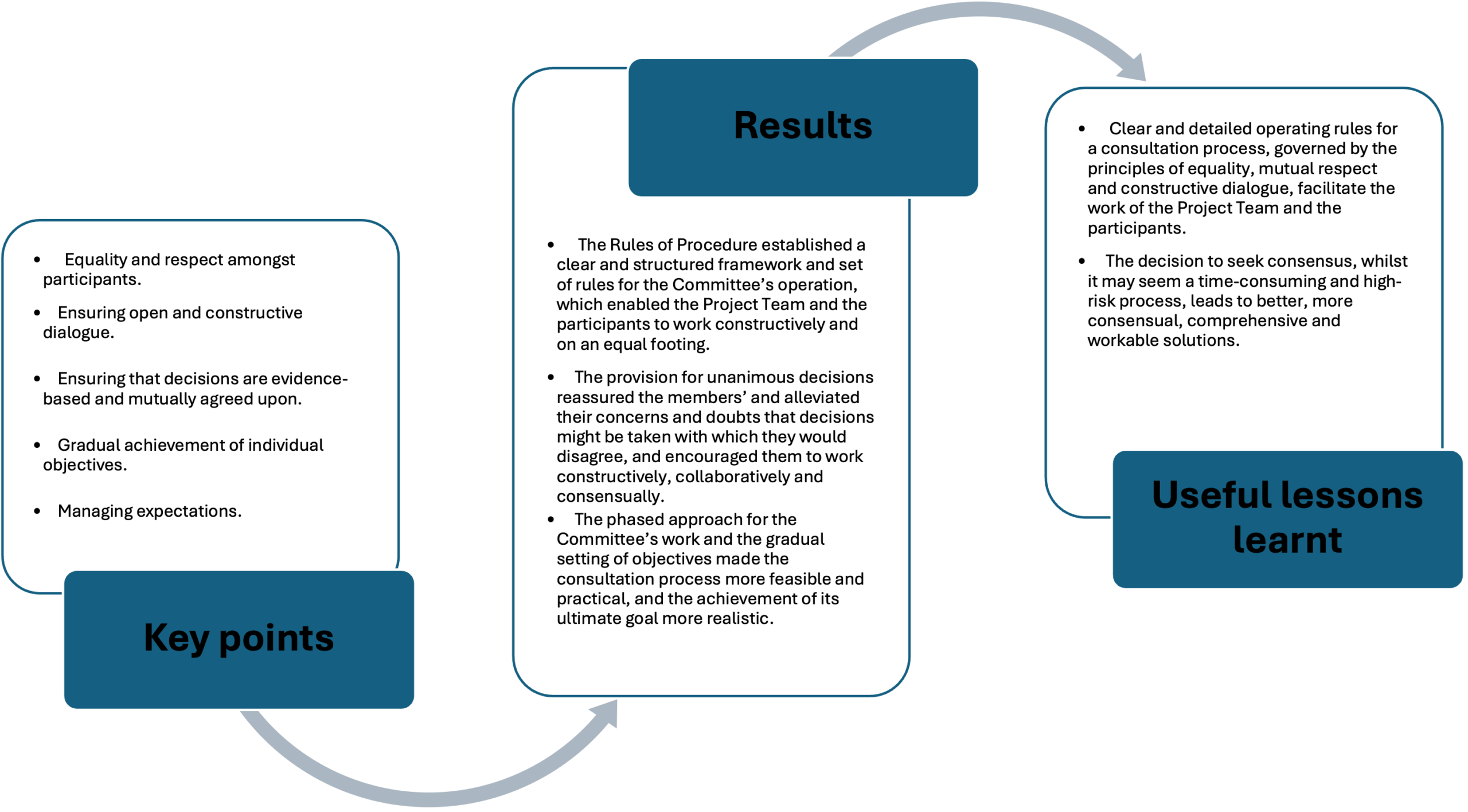
In our case, the Project Team paid particular attention and devoted a significant amount of time —in close and continuous collaboration with the external facilitator—to the detailed planning of the process as a whole and the operating rules of the Co-Management Committee, as well as to the action plan and timetable for the entire consultation process (spanning a period of two years). Specifically:
- Rules of Procedure of the Committee: The detailed rules of procedure were drawn up with the primary aim of ensuring that the process of discussion, consultation and decision-making is structured, promotes and ensures the equal participation and contribution of all members, to ensure respect for all views and to promote constructive dialogue, whilst at the same time enabling well-informed and mutually acceptable decisions to be taken.
- Action Plan: Given the Committee’s complex and demanding objective – namely, to draw up a comprehensive proposal for protection zoning and conservation measures for the establishment of the Gyaros MPA, that will ensure the effective protection of the region’s biodiversity, whilst respecting its historical value and promoting the sustainable development of local communities, the Project Team drew up an Action Plan for the Committee, with clear individual stages/phases and specific, achievable sub-objectives that would lead to the fulfilment of the ultimate objective. The aim of the initial stages was to achieve a common understanding of the subject matter and the region amongst the Committee members. The members were characterised by a diversity of knowledge, expertise and interests. Having secured this, in the subsequent stages the Committee would address specific issues relating to the formulation of conservation measures, management actions and the governance structure of the MPA. In the final stages, the Committee would draw up its final and comprehensive proposal for the establishment and management of the MPA and would consider its future direction. The phased development of the Committee’s operations was planned in this way, with specific interim objectives, so that the Project Team could tackle, step by step, the difficulty of the entire undertaking and to manage appropriately the expectations of both the Committee members and the team itself.
- Time Plan of the Committee: Based on the Action Plan, the Project Team also drew up the corresponding Time Plan for the Co-Management Committee’s operation. Given the need to proceed in stages through the individual phases and to address more specific issues, six Committee meetings were scheduled over a period of 2.5 years, i.e. one meeting every 4–5 months.
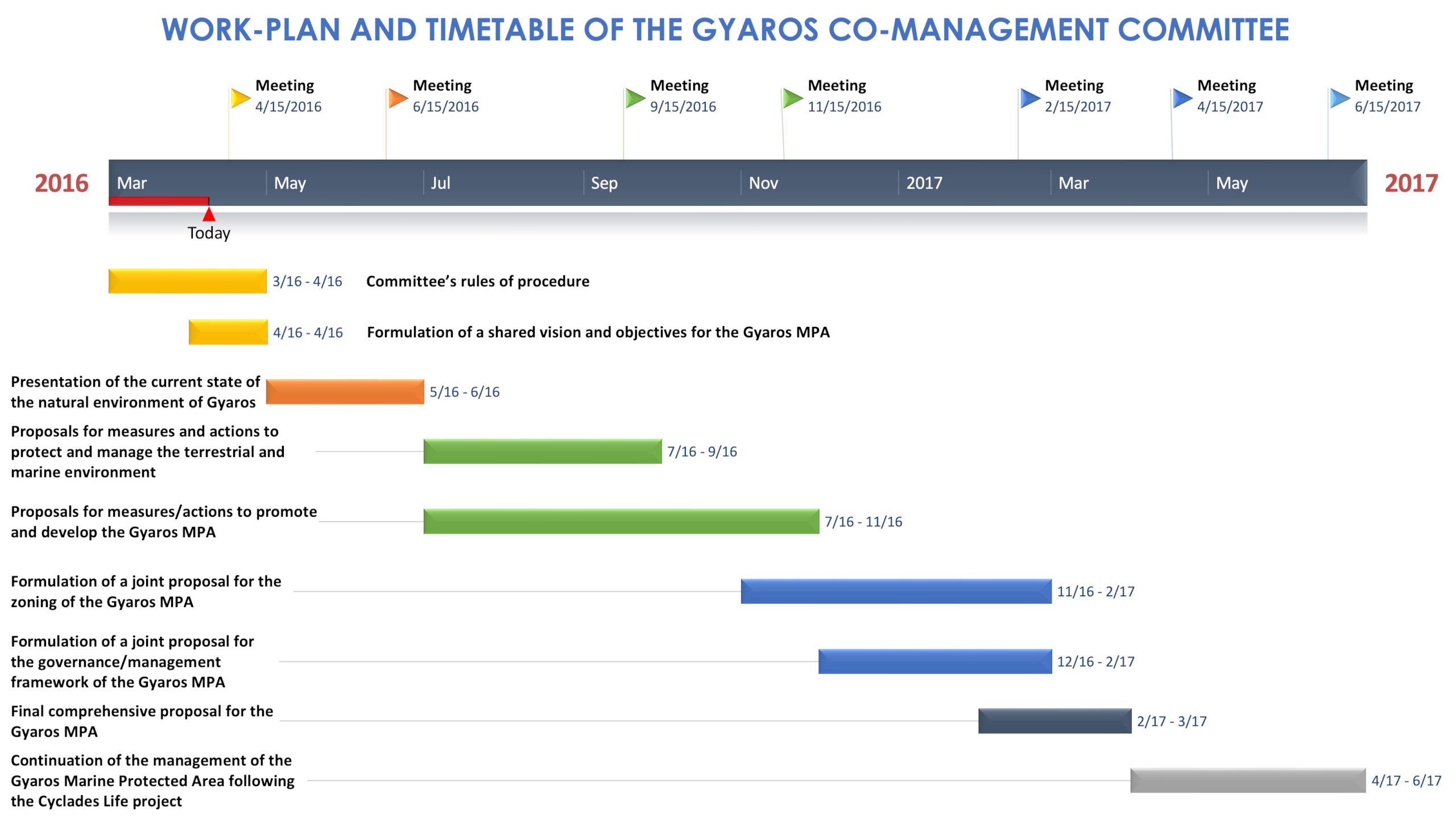
It was deemed that such a work schedule was realistic and achievable, taking into account the participants’ other commitments, whilst at the same time the frequency of meetings was appropriate for maintaining good and stable momentum amongst the Committee members, allowing sufficient time between meetings for each member organisation to consider and address the issues raised.
Preparing the Meetings
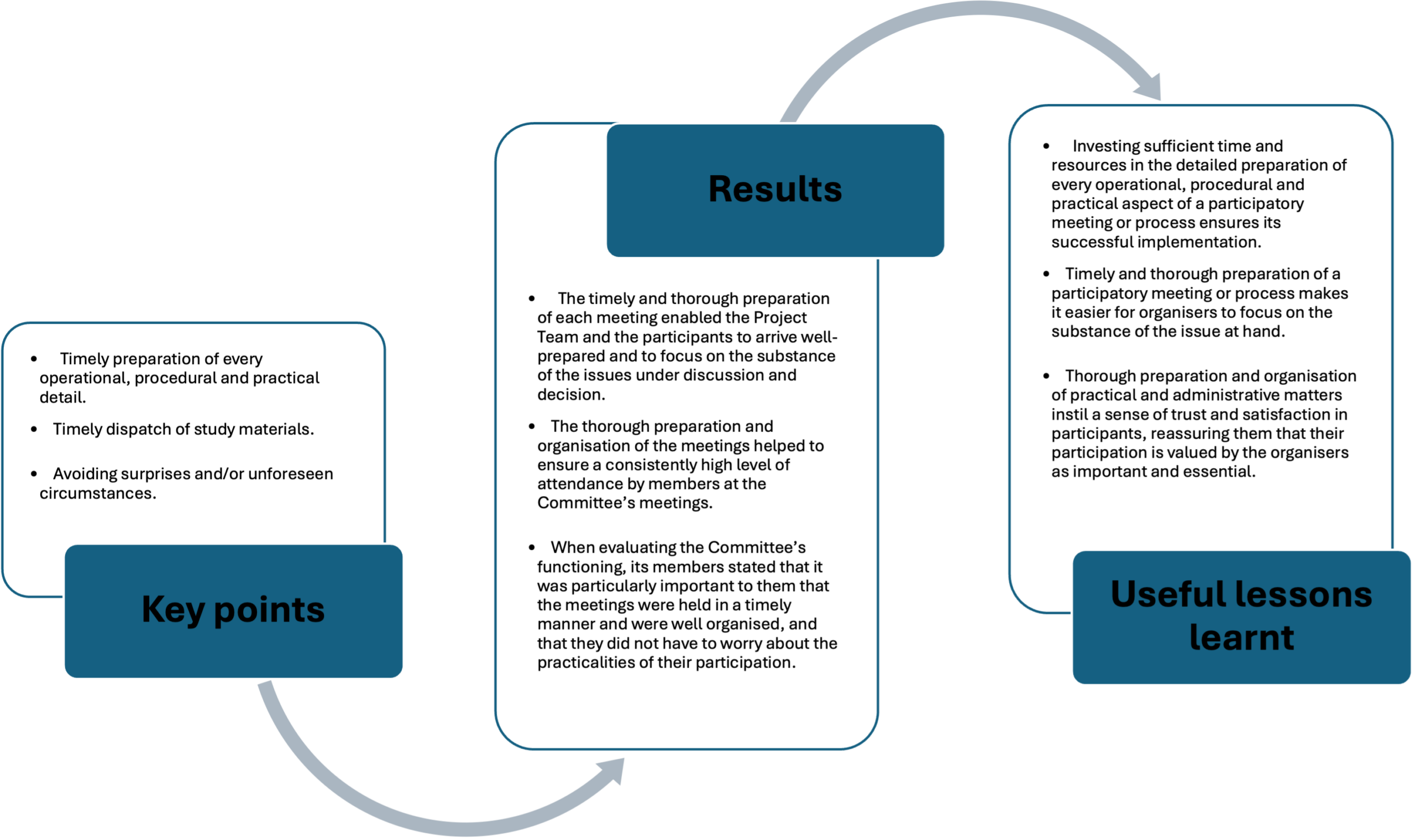
It is essential that every participatory meeting is prepared well in advance and thoroughly, with sufficient time being set aside in advance by the organisers, so that participants arrive well-prepared and ready to contribute in a structured and meaningful way.
In our case, having prepared the Committee’s Action Plan and Work Schedule, the Project Team, in direct and ongoing collaboration with the facilitator, proceeded, step by step, with the detailed planning and preparation of each meeting.
Thus, a considerable time – 2 to 3 months – before each scheduled meeting, the Project Team:
- identified the topics to be discussed,
- drew up the meeting’s agenda,
- determined which representatives of the project partners, Committee members or external experts would present topic-specific presentations on which specific topics,
- provided clear instructions for their timely preparation, as well as for the preparation of any supporting or illustrative material.
Furthermore, in collaboration with the facilitator, a decision was made regarding the appropriate venue (size, layout, accessibility, etc.) for each meeting and exactly how it should be conducted in terms of procedure. In other words, which tools would be used for the participatory discussion of each individual item on the agenda, such as brainstorming, work in small groups, plenary sessions, drawing, mapping, etc. Based on the choice of tools for each topic, the corresponding supporting materials (panels, maps, drawing materials, games, etc.) were also prepared.
Fostering a Climate of Trust in the Process and αmong Participants
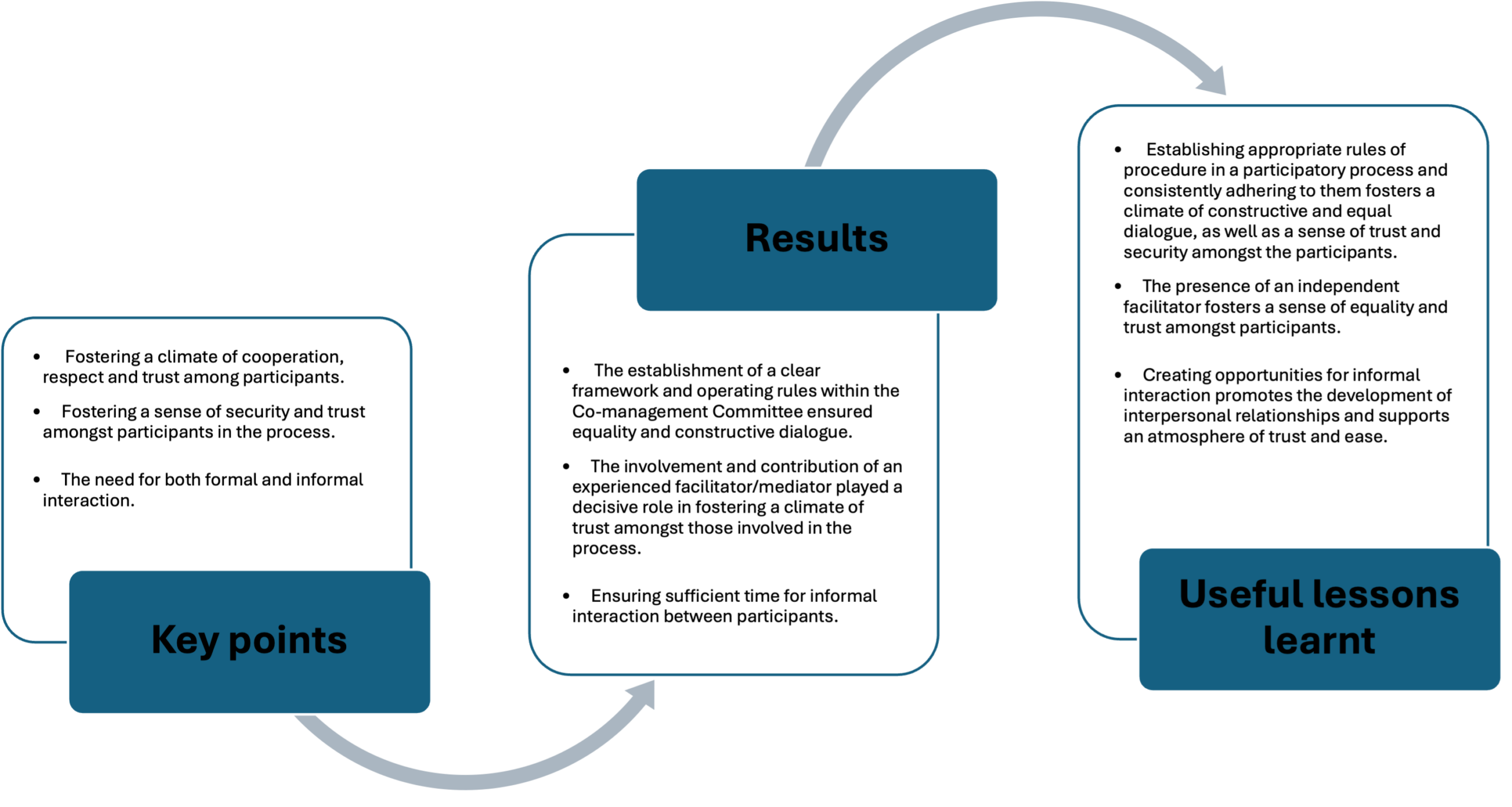
One of the most important factors for the success of a participatory process is the creation of a climate of trust between the organisers and the participants. This is not something that can be guaranteed in advance, but it can and must be achieved gradually: through the way in which the processes themselves are conducted, through the contribution of specialist external facilitators, and also through the gradual development of interpersonal relationships between the participants and the Project Team.
In our case, a decisive factor in fostering a climate of trust within the Co-Management Committee was the decision to appoint a specialist external expert to act as a facilitator and mediator, as well as the drafting of the Rules of Procedure, which ensured equality and respect for members and their views.
Another crucial factor was the provision in the Rules of Procedure stipulating that decisions must be taken unanimously. The right of any member to exercise a veto was incorporated into the Rules of Procedure following a particularly pertinent proposal by the Secretary-General of the Decentralised Administrative Authority of the Aegean, with the requirement that when a veto was exercised by a member an alternative proposal be tabled for discussion at the same time. This proposal was particularly important as it made the participants feel more ‘secure’, as it provided them with a ‘safety net’, enabling them to prevent the advancement of a proposal to which they were completely opposed, whilst at the same time obliging them to be constructive and to put forward alternative proposals.
Although the role played by informal interaction between participants is often not given due importance, in our case the opportunities provided for more relaxed contact and interaction, outside the formal Co-Management Committee meetings. At the dinners organised for all participants or during coffee breaks, the more informal discussions and relaxed interaction between members proved decisive in the gradual development of interpersonal relationships.
Conducting the Meetings
The implementation of participatory processes, despite their prior preparation, is a particularly demanding and difficult process; to be effective, the team coordinating the implementation must operate in a structured, focused and goal-oriented manner, facilitating and supporting the participants, whilst demonstrating directness, adaptability and honesty, and upholding the principles of equality and transparency.
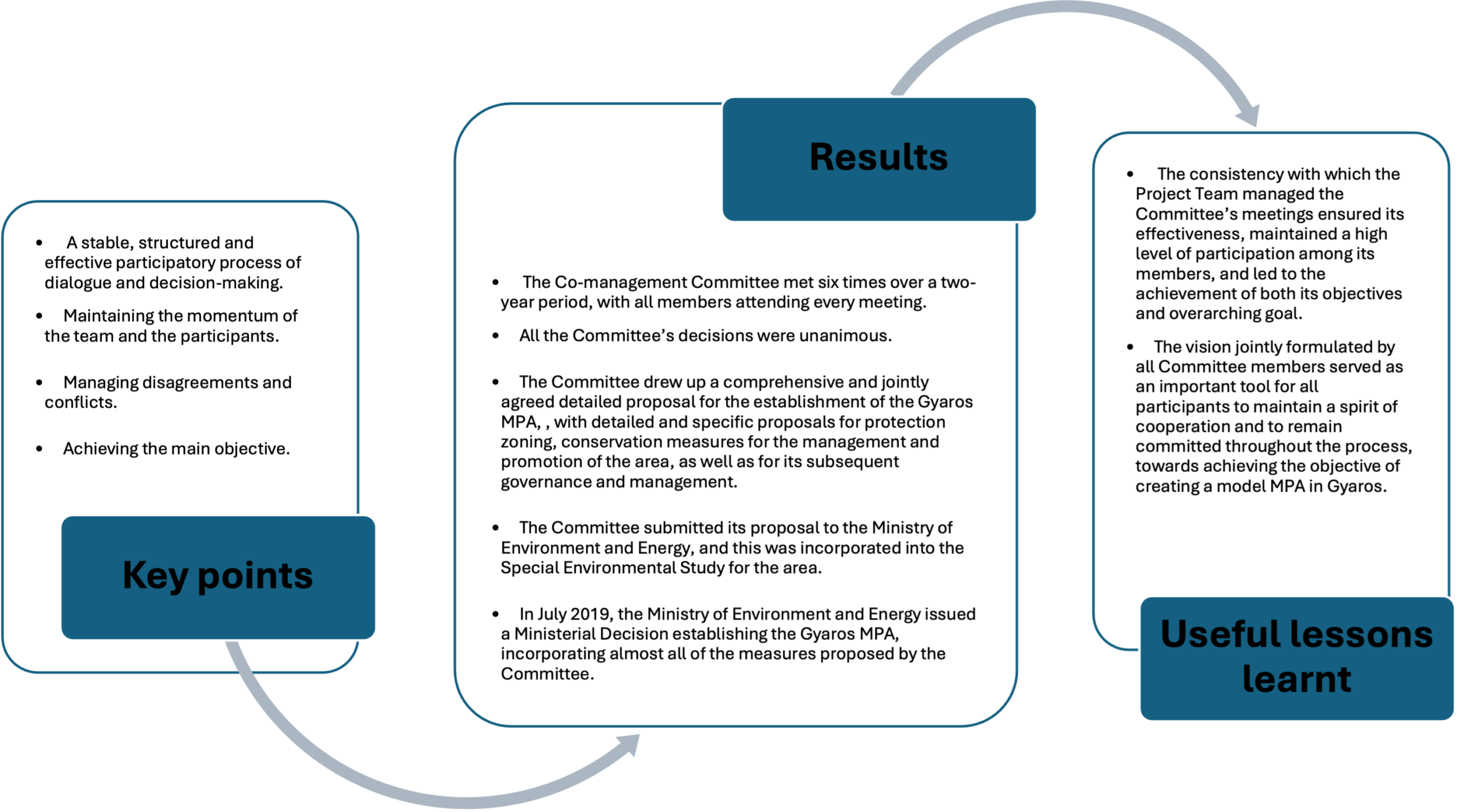
In our case, the Project Team, working in particularly close and continuous collaboration with the external specialist facilitator, organised, coordinated and successfully implemented six consecutive meetings of the Gyaros Co-management Committee over a period of approximately two years (April 2016 – March 2018).
Key factors in the successful implementation of all the meetings were that, to a large extent, the meetings:
- were well prepared and organised, with a clear agenda and objectives,
- took place in a suitable venue, with an appropriate layout that helped participants feel at ease,
- there was a good supply and flow of information (presentations, talks, supporting material), delivered in an appropriate manner, so that all participants had a full understanding of the topics,
- the agreed rules of procedure were followed, which facilitated an equal and open dialogue,
- when differences of opinion and/or conflicts on specific issues arose, they were brought to light, and there was constructive dialogue, discussion and consideration of alternatives, as well as the identification and documentation of compromise solutions;
- the rules of transparency were observed within the Committee, and
- there was a continuous flow of information regarding the progress and results of the Committee’s work.
Thus, following this long and demanding process and extensive participatory procedure, the Committee succeeded in reaching a series of unanimous decisions and ultimately formulating a comprehensive and jointly agreed detailed proposal for the creation of the Gyaros MPA, with detailed and specific proposals for protection zoning, conservation measures for the management and promotion of the area, as well as for its subsequent governance and management.
Assessment and Management of Expectations
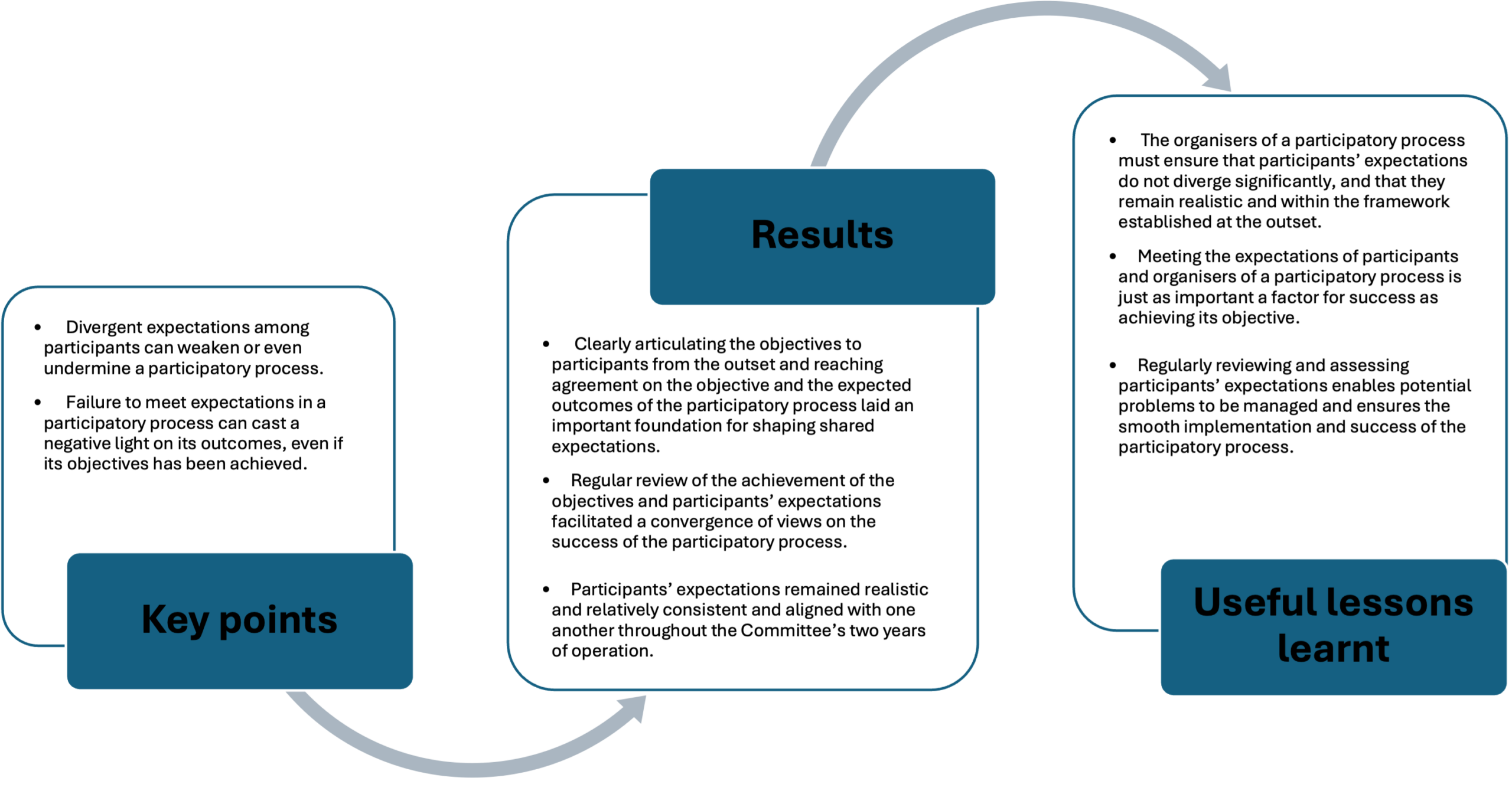
It is natural and human for both organisers and participants in a participatory process to develop and maintain expectations, both regarding the process itself and, in particular, regarding the outcome and the achievement of the objectives set for it. Organisers, however, must ensure that expectations – both their own and those of each participating body – do not diverge significantly and that they remain realistic and within the framework established at the outset and/or during the course of the participatory process.
Often, the issue of expectations is not given due attention, resulting in misunderstandings, conflicts or rifts between participants and/or with the organisers. Thus, a well-implemented participatory process may be regarded as a failure by some participants, even if it achieved its objectives, because they had different expectations regarding the process itself or were anticipating a different outcome.
In our case, particular importance and attention were given to all stages of the participatory process, so that participants’ expectations would be realistic, broadly shared and aligned with one another, and would remain so throughout the Co-Management Committee’s duration, which lasted for almost two years.
This was achieved through clear and repeated references to the ultimate objective, the Committee’s role and desired outcome, as well as the role and responsibility of each of its members, both during the initial discussions with the organisations invited to participate and at every meeting of the Committee. A crucial role in establishing clear and well-defined objectives – and, by extension, expectations – was played by the detailed discussion, clarification and agreement reached at the Committee’s first meeting regarding the work plan and the specific, phased objectives for each stage, as well as the final objective and the expected outcomes of the entire participatory process.
A characteristic phrase used in discussions with the members to assess the achievement of their objectives and expectations was that:
‘Any decision taken unanimously by the Committee, in order to be the most appropriate and best possible, should satisfy us all greatly, but at the same time leave each of us slightly dissatisfied, as it will be the result of a creative compromise, for the sake of the broader and overarching objective.”
A particularly useful tool for assessing whether some members’ expectations had diverged was the discussion of progress in relation to the Action Plan and the achievement of the interim targets set at each meeting, as well as the individual assessments and evaluations of progress made by all members following each meeting. Furthermore, after each meeting, the facilitator would contact the members directly to ascertain whether any issues had arisen that needed to be discussed further by the organisers, either in private or at a plenary session of the Committee.
Transparency and Communication with Participants and Stakeholders
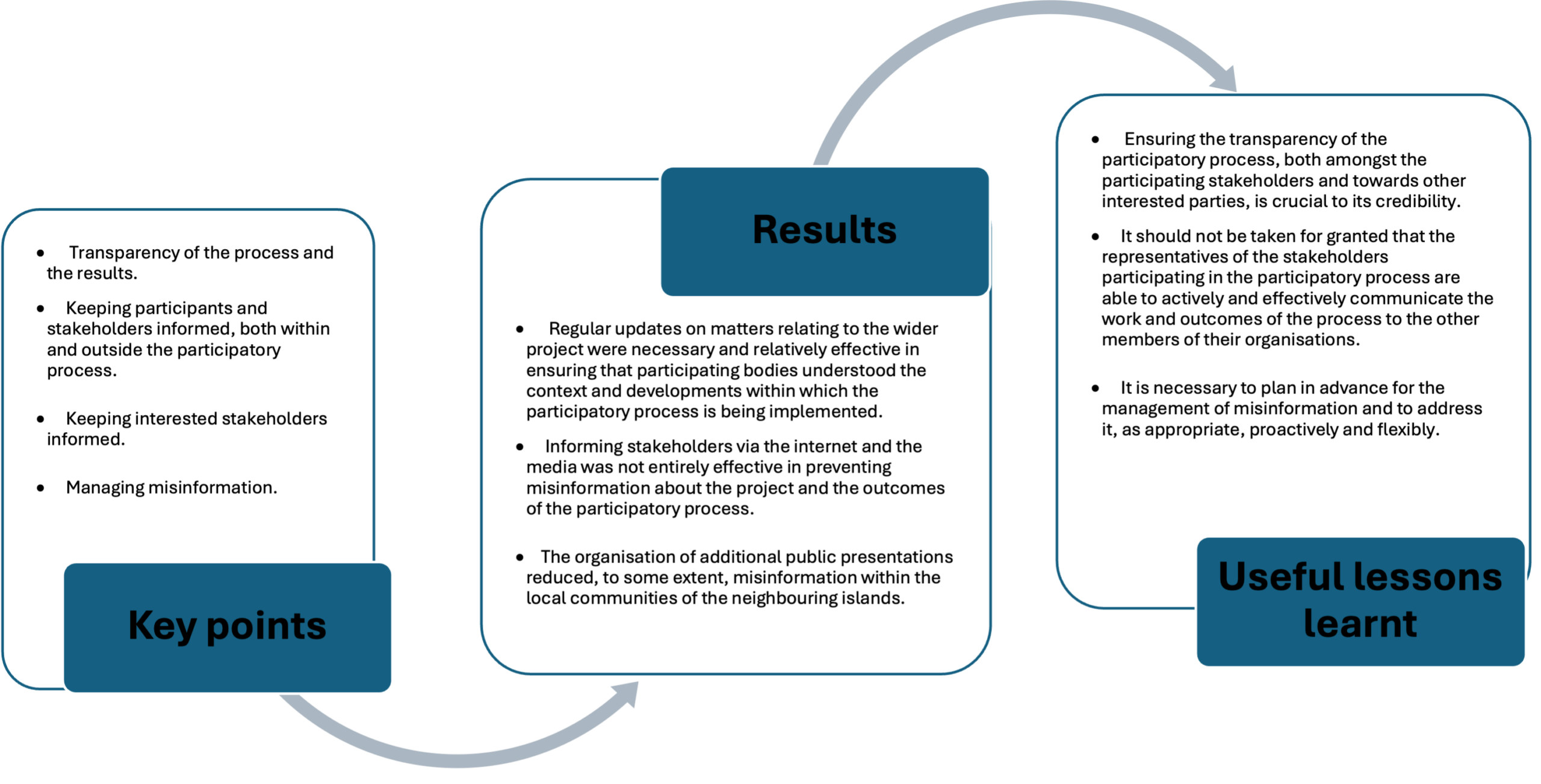
Keeping participants and stakeholders regularly informed about a participatory process carried out as part of a wider initiative or project – both before it begins, whilst it is underway, and after its conclusion, is important, as it ensures that developments within the initiative, which may affect the participatory process itself, are known to all. This avoids ambiguities or misinformation and ensures that those taking part in the process are aware of developments and will not feel awkward or taken by surprise, which could negatively affect their participation and attitude during the participatory process.
At the same time, it is important that a participatory process concerning a matter of interest to a wide range of stakeholders – not all of whom, however, are involved in the process – should be governed by rules of transparency, and its process, progress and outcomes should be made public, so that they are known to all and any stakeholder wishing to to respond and/or intervene is given the opportunity do so.
In our case, given the importance, the complex and sensitive nature of the subject matter, and the objectives of the participatory process for the stakeholders involved, we had planned from the outset a series of communication actions aimed, first and foremost, to keep the participating bodies regularly informed of developments within the wider initiative. The Project Team responsible for the entire process, in collaboration with the Committe’s secretariat, in addition to providing updates at each meeting on developments within the wider initiative, sent the representatives of the participating stakeholders regular written updates on the project’s progress and/or directed them to the project’s website, where it posted important announcements and news.
Furthermore, the work, progress and outcomes of the Co-Management Committee were open, accessible and transparent to other interested parties who were not directly involved in it. For this reason, prior to each meeting of the Committee, a press release setting out the items for discussion and decision was sent to local and regional media and posted on the project’s website. Similarly, after each meeting, a press release summarising what had been discussed and decided was distributed and published in the media and on the project’s website.
In assessing the overall effectiveness of the communication activities, we conclude that it would have been useful to place greater emphasis on, and to have invested even more in, actively informing the wider community on the neighbouring islands. It appeared that, whilst there was a continuous flow of information and updates via the project’s online tools and through the media, this was not sufficient to fully and effectively minimize misinformation and doubts held by stakeholders regarding the processes and outcomes of the Co-management Committee, as well as the participatory process itself.
Evaluation
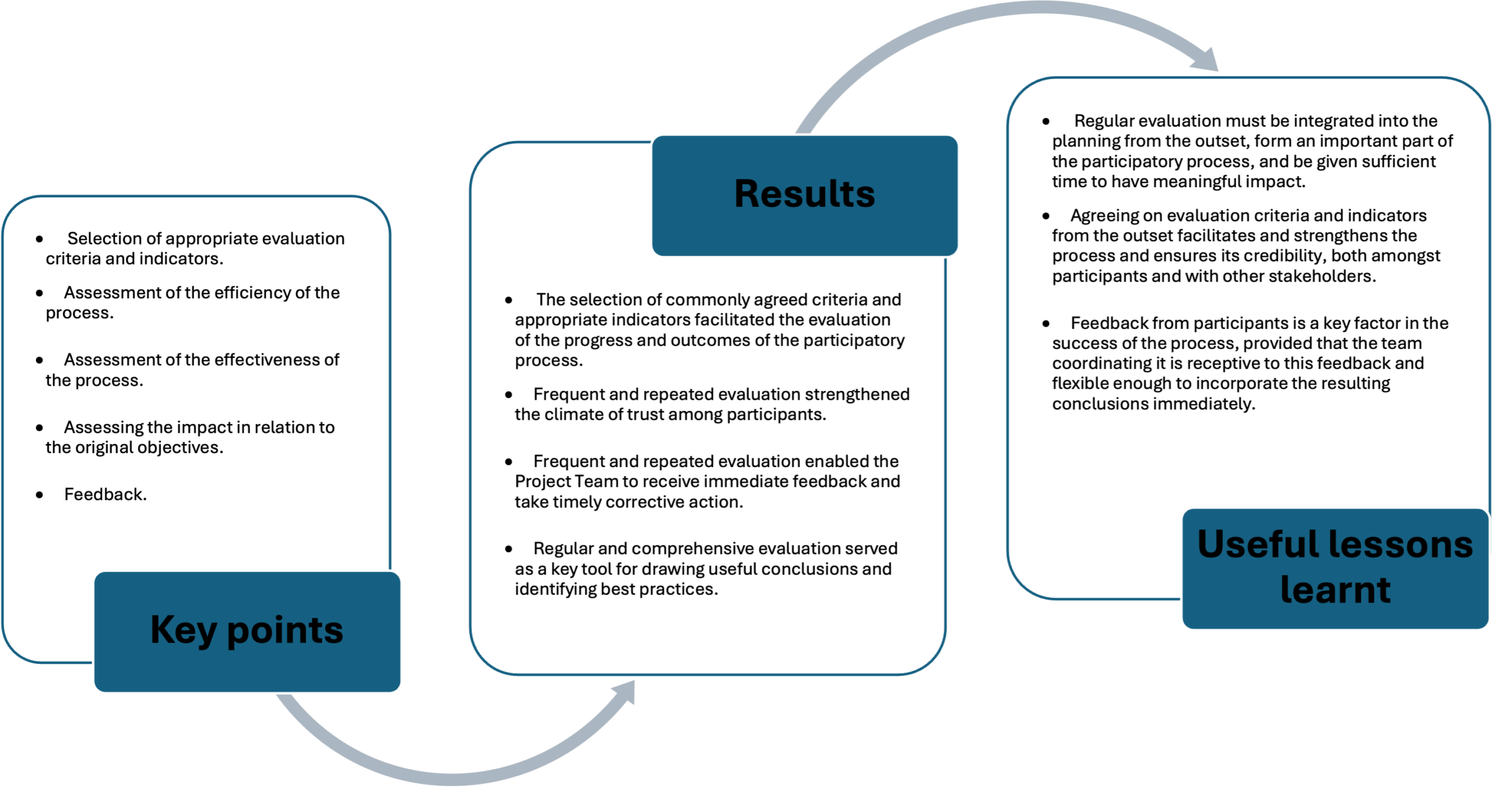
The evaluation of any participatory process is a critical phase for measuring the effectiveness of the initiative, assessing its results, and documenting good practices. Within the development and implementation cycle of any project, evaluating its progress – in terms of efficiency, but above all in terms of effectiveness in achieving its objectives – is a fundamental and necessary process. Through regular monitoring and evaluation – covering outcomes, budget expenditure, changes in the external environment, and emerging risks or opportunities – the team coordinating the project is able to make adaptive decisions and adjust its actions, in order to maximise results (adaptive management). Planning, timing and regularity are of crucial importance. Furthermore, the evaluation process and criteria must be established in advance, discussed and agreed upon with the participants before the implementation of any participatory processes begins. This ensures the credibility of the evaluation process, both in the eyes of the participants themselves and of other stakeholders who have an interest in assessing the progress and outcomes of the participatory process. There is a wealth of methodologies and tools for evaluating participatory processes in the literature that can be utilised (some of which are listed below).
In our case, the evaluation of the participatory process, followed during the planning of the Gyaros MPA, and in particular the evaluation of the functioning of the Co-management Committee, was regular and continuous throughout its duration and was based on specific questionnaires, containing both open-ended and closed-ended questions, which recorded the views of the Committee members following each meeting.
During the Committee’s inaugural meeting, the evaluation criteria and indicators were discussed and agreed upon, relating to the efficiency, effectiveness and impact of the entire process. It was also agreed to place emphasis on evaluating members’ active participation in meetings, the decision-making process and the credibility and outcomes of the Committee’s function, adherence to the principles of transparency, equality and inclusion, and respect for all views.
Continuous and repeated evaluation proved extremely useful to the Project Team. The results of the evaluation, following each Committee meeting, were analysed and discussed by the Project Team prior to the next Committee meeting. This enabled the Team to assess what was working well in the overall process and what needed to be changed or improved, so that it could take corrective action at subsequent meetings and, if necessary, adjust the pace and plan of action that had originally been formulated and agreed.
Furthermore, following the completion of the Committee’s work, a comprehensive evaluation was carried out by the independent facilitator during a dedicated session with the Committee members, based on a set of criteria agreed in advance with the Committee members.
In addition, a series of in-depth interviews was conducted with selected members, during which views on the effectiveness of the entire participatory process were recorded in greater detail. The conclusions of the overall evaluation were documented and presented in a special report, which was sent to all members and made available to any interested party. Through this process, the achievements, challenges and critical success factors were documented, laying the groundwork for optimising similar processes with a view to potentially replicating them in other comparable participatory processes.